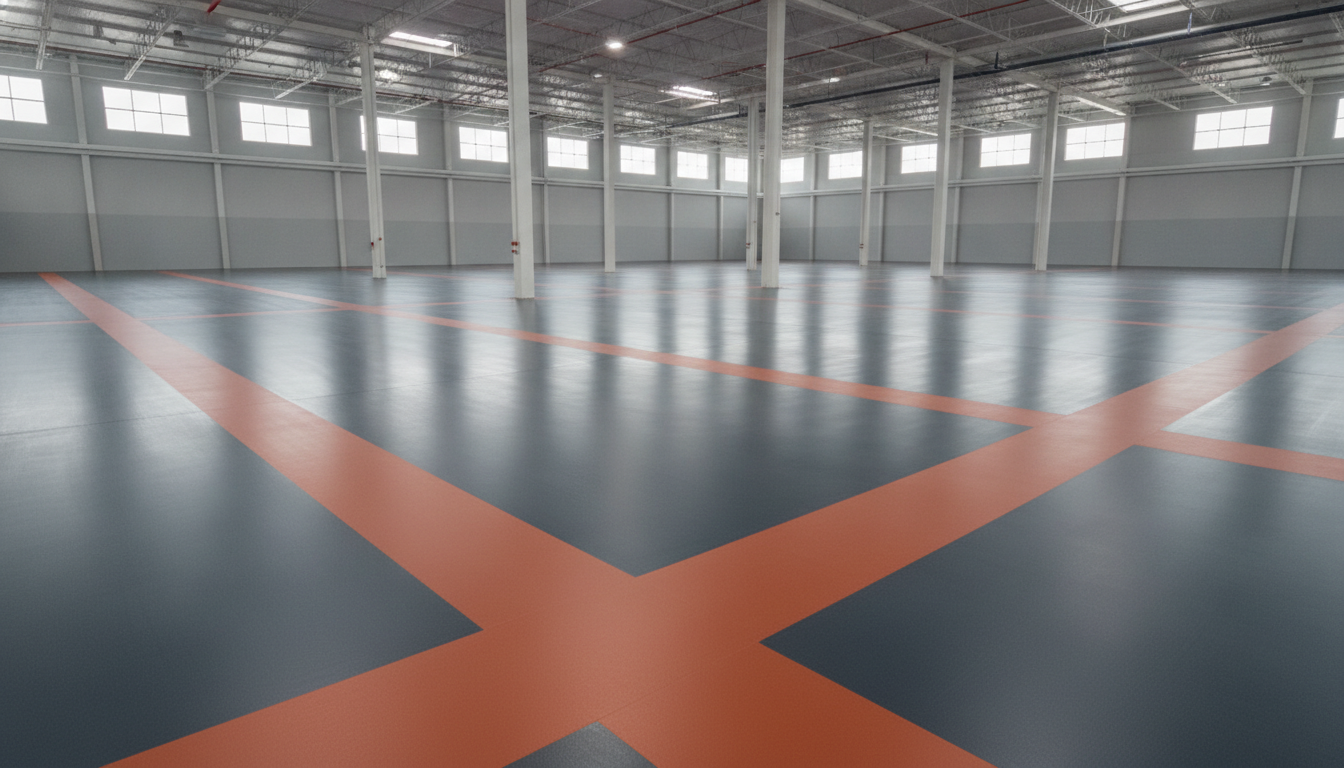
Not every industrial floor needs the same coating system. Traffic type, chemical exposure, and cure-time constraints all shape which system actually makes sense for your facility. Here's a practical overview of four common categories.
A well-proven, cost-effective option for moderate-traffic warehouse and light-industrial floors. Epoxy offers good chemical resistance and a durable, easy-to-clean surface, though it can be more UV-sensitive and slower-curing than some alternatives — a factor for facilities that need fast turnaround.
Cure significantly faster than standard epoxy — sometimes allowing a facility to return to service within a day — and offer strong UV stability and flexibility, useful for floors exposed to temperature swings or where a fast install window is critical.
Manufacturing environments with exposure to solvents, acids, or specific industrial chemicals may need a specialty formulation beyond standard epoxy or polyaspartic — selected based on the exact chemical exposure profile of your facility.
Often applied as part of a broader coating system rather than standalone, safety marking (traffic lanes, hazard zones, equipment paths) is a functional layer that supports warehouse safety compliance and workflow efficiency.
The right system depends on your actual traffic load (foot traffic vs. forklift vs. heavy equipment), chemical exposure, and how much downtime you can afford during installation. El Paso's logistics and manufacturing corridor sees a wide range of these conditions — which is why a one-size-fits-all recommendation rarely holds up.
Planning a commercial or industrial coating project? El Paso Coatings will assess your facility's specific traffic and exposure conditions before recommending a system — reach out to schedule a walkthrough.
No obligation. We'll walk your space and give you a real number.