Moisture moving up through a concrete slab is one of the most common — and most preventable — causes of coating and flooring failure. If you've had a coating or floor fail before, or you're building new, understanding moisture-vapor barriers is worth the five minutes it takes to read this.
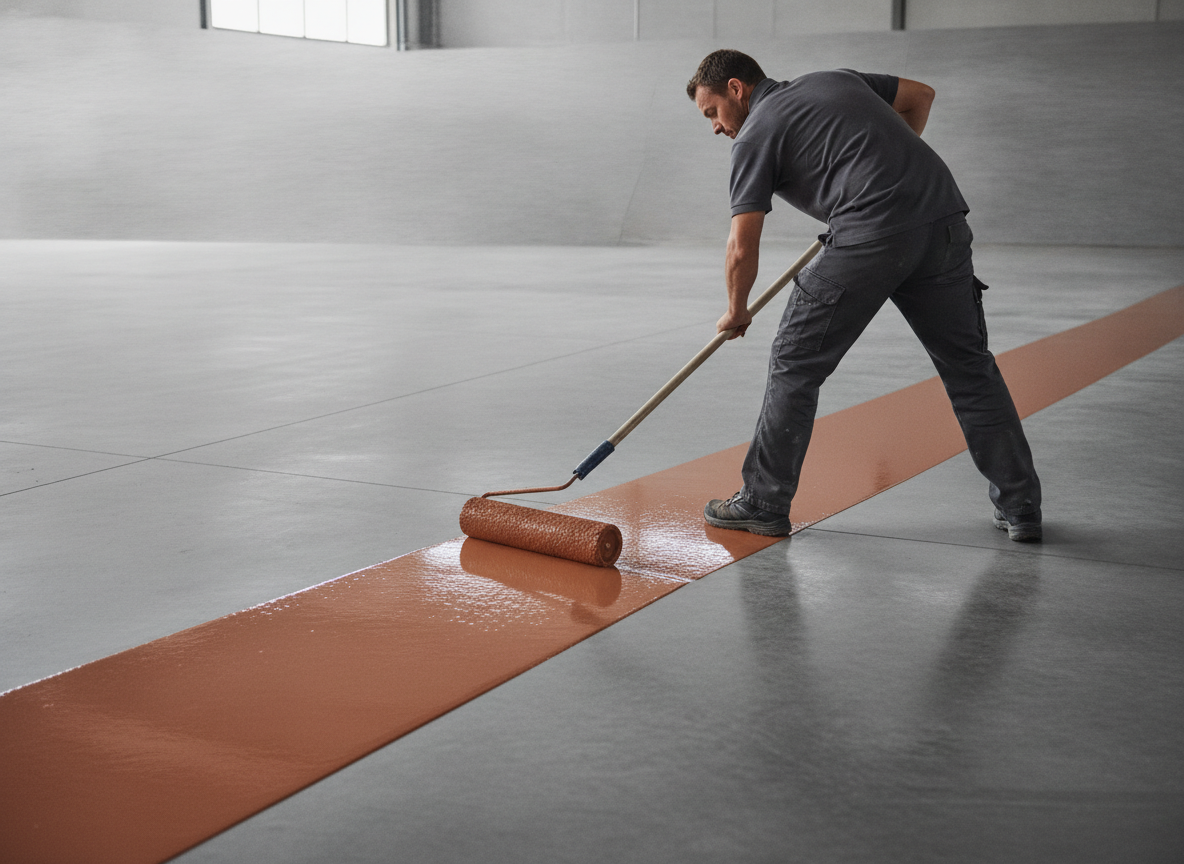
Concrete is porous, and moisture from the ground below can migrate up through a slab over time — a process called moisture vapor transmission. A vapor-barrier coating or membrane blocks that migration, protecting whatever coating or flooring sits above the slab from moisture-related failure.
Moisture testing — using calibrated meters or calcium chloride test kits — measures the actual vapor transmission rate from your slab. This tells us whether a standard coating system is sufficient or whether a higher-rated moisture-mitigating primer is needed before anything else goes down.
Much of El Paso's residential and commercial construction sits on slab-on-grade foundations, and West Texas's expansive-soil conditions can affect moisture behavior beneath the slab. Skipping moisture testing on a slab-on-grade build is one of the more common — and most expensive — mistakes in coating and flooring installation.
Yes — vapor-barrier coatings aren't just for new construction. If you've had a coating or flooring failure that turned out to be moisture-related, a vapor-barrier system can be applied to the existing slab as part of remediation.
The "best" moisture barrier depends on your slab's actual measured vapor transmission — not a generic recommendation. Testing first, then matching the system to your real conditions, is what prevents a repeat failure.
Concerned about moisture in a new build or a slab that's failed before? El Paso Coatings offers moisture testing and vapor-barrier coating services — reach out to schedule.
No obligation. We'll walk your space and give you a real number.